
The Ukrainian Esports Federation (UESF) has joined an educational campaign organized by the Ministry of Digital Transformation of Ukraine and the Diia.Osvita platform, which aims to help teenagers better navigate issues of digital safety. The initiative was launched on the eve of the new school year.
As part of the campaign, the UESF, in collaboration with the Ministry of Digital Transformation, prepared a guide for Diia.Osvita titled “Hyena Hygiene on PEGI: How to Understand Age Ratings in Online Games.”
The guide explains how the PEGI system works and what to look for when choosing games. The age ratings of 3, 7, 12, 16, and 18 do not indicate the level of difficulty but rather whether the content is appropriate for a specific age group.
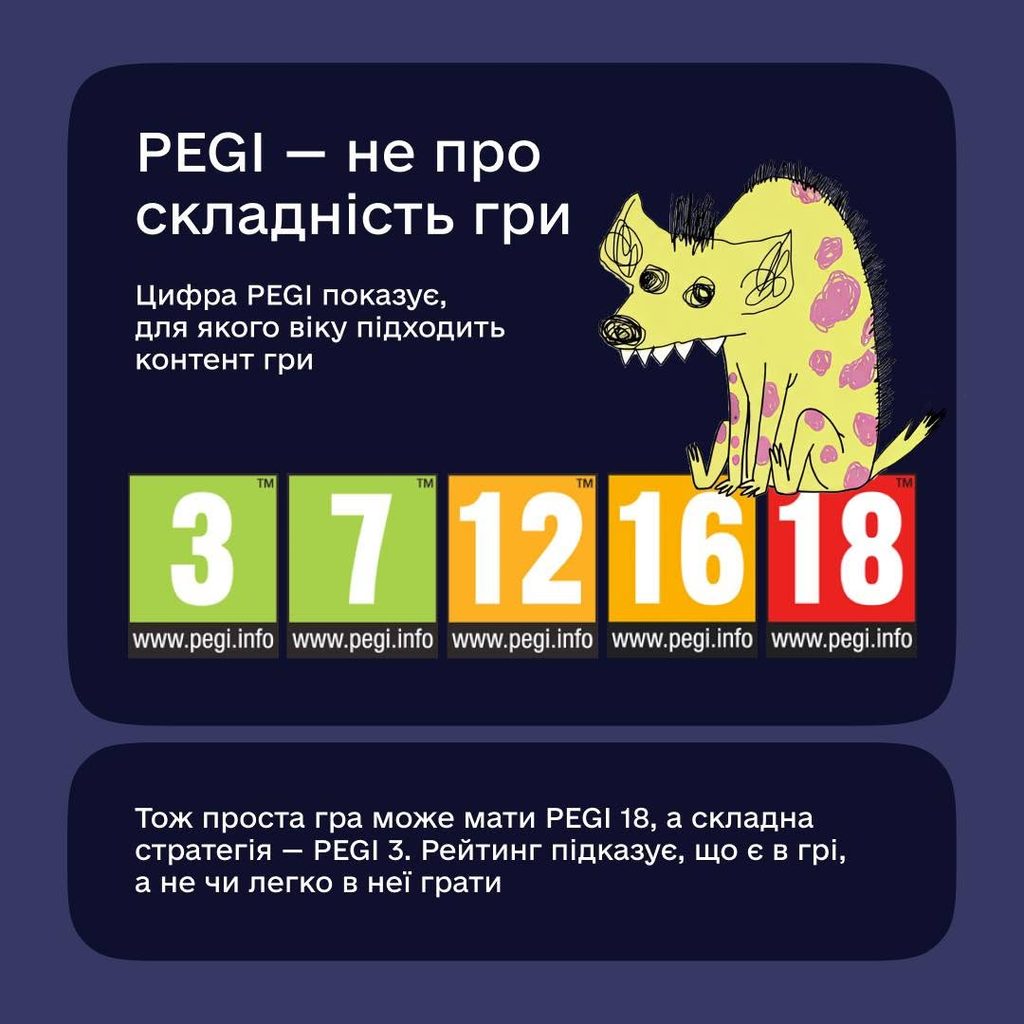
Specific icons warn of violence, profanity, real-money purchases, pressure mechanics, and interaction with other players.
You can check the rating for a specific game using the free PEGI App. It features a database of games, filters, and recommendations for setting up parental controls. The full guide, “Hyena Hygiene on PEGI,” is available on the Diia.Osvita platform.
Online Threats Gamers Should Be Aware Of
As part of the campaign, special attention was given to the article “Hyena Hygiene Hosts a Live Stream: Online Safety in Gaming.” It examined situations that could pose a danger to teenagers while using gaming platforms and communicating online.
The authors of the guide examine common tactics that cybercriminals use to lure young players. For example, they might offer supposedly free skins or in-game currency, invite them to test nonexistent games, or send messages on behalf of a fake support service. Another common risk is phishing links, which scammers may use to try to gain access to accounts.
However, the dangers in gaming aren’t limited to fraud. The article also discusses cyberbullying in game chat rooms, grooming, blackmail using personal photos, and deepfakes, which can be used to deceive or pressure users.
Meanwhile, the UESF reported that it is working to make the PEGI App available in Ukrainian. This should make the service more user-friendly for Ukrainian users and parents who want to control the content their children have access to.
“Millions of teenagers spend time playing online games every day, and one of the federation’s goals is to make this environment understandable and safe for them and their parents. We are ready to continue contributing our expertise to such initiatives, in particular by supporting the process of localizing the PEGI App into Ukrainian so that this tool is accessible to every Ukrainian family in their native language,” said UESF President Maksym Krippa.